
News
Stay up to date on the latest crypto trends with our expert, in-depth coverage.

1Bitget UEX Daily | Negotiations Deadlocked, Oil Rebounds; Cook to Step Down as CEO in September; Warsh Pledges Strict Monetary Policy Independence (April 21, 2026)2The US dollar index has already erased the gains since the start of the war.3Netflix NFLX closed down 2.55% on Monday with a trading volume of $5.972 billion. Q1 performance was solid but guidance was cautious. Reed Hastings will not continue as chairman. Morgan Stanley maintains its strong overweight rating.
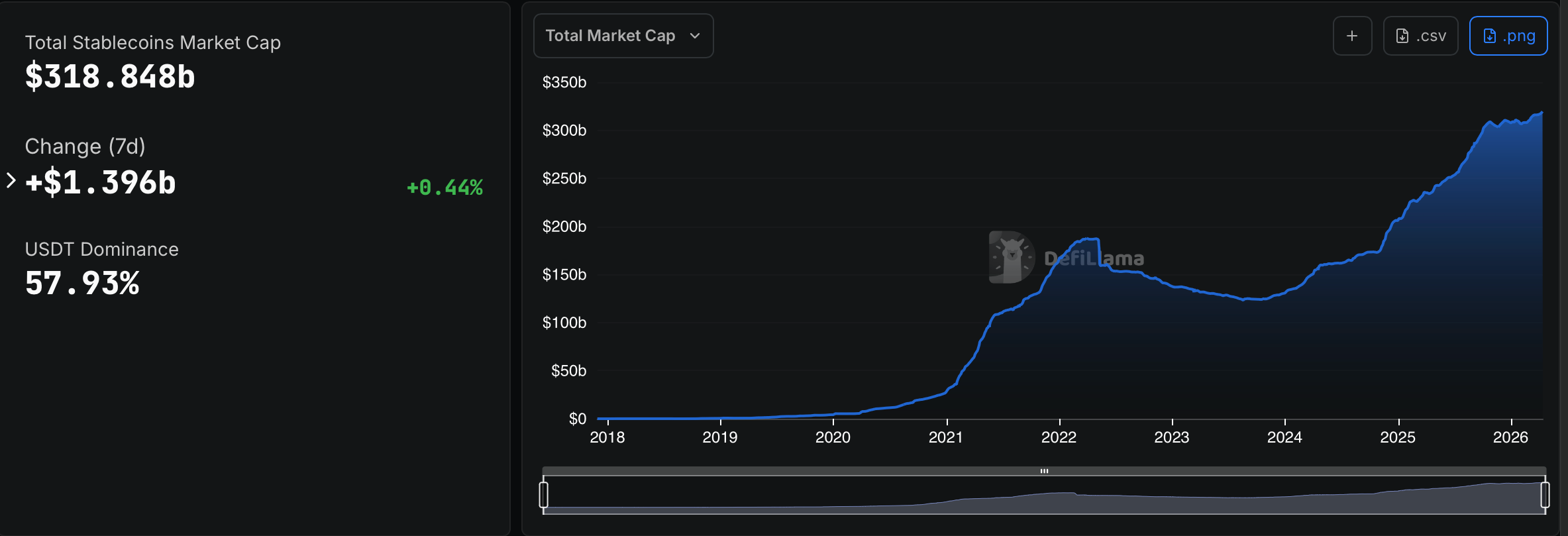
Visa deepens blockchain push with Tempo validator node launch
Cointelegraph·2026/04/14 17:09

USD/CAD trims its decline as Oil drops under $90 amid positive sentiment over US-Iran negotiations
101 finance·2026/04/14 16:54
IRYS (IRYS) 24-hour amplitude 41.1%: High trading volume and leverage signals drive sharp fluctuations
Bitget Pulse·2026/04/14 16:49
Immunefi (IMU) fluctuates 44.5% in 24 hours: Low liquidity amplifies trading volume changes
Bitget Pulse·2026/04/14 16:47
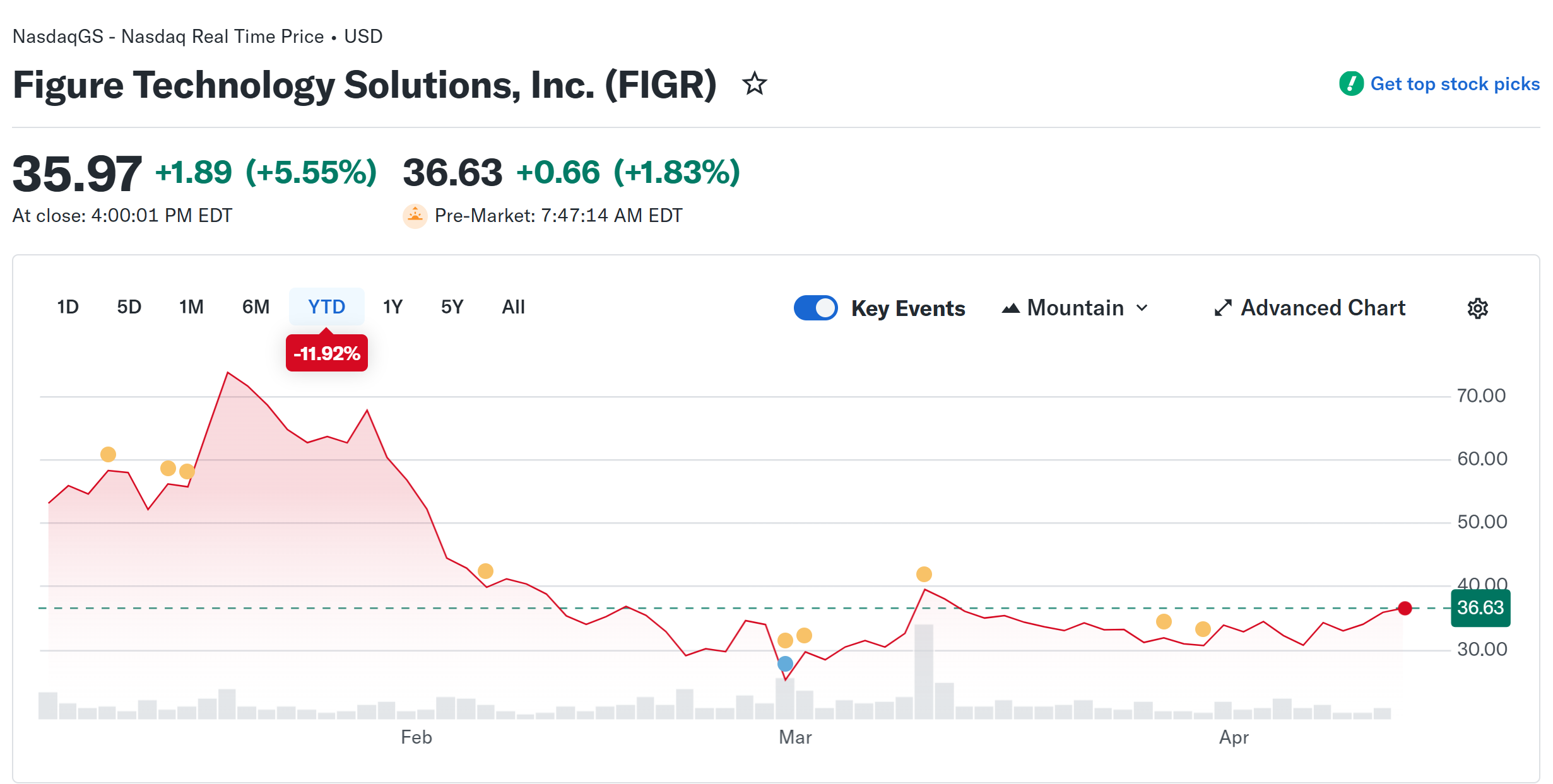
Figure and Hastra widen DeFi credit offering with auto loan launch
Cointelegraph·2026/04/14 16:33
RAVE (RaveDAO) 24-Hour Volatility at 157.1%: Over $43 Million in Short Squeeze Liquidations Dominated
Bitget Pulse·2026/04/14 16:02
SWCH (SwissCheese) fluctuates 64.9% within 24 hours: Severe volatility driven by low liquidity speculation
Bitget Pulse·2026/04/14 16:02
GENIUS (GENIUS) fluctuates 123% in 24 hours, TGE launch and exchange listings are the main drivers
Bitget Pulse·2026/04/14 16:02
Flash
02:17
Bitunix Analyst: The dollar's pricing power oscillates between policy credibility and war outcomes, as the market enters a phase of exchange rate-driven risk reallocation.BlockBeats News, April 21st. The market began trading the "Who Determines the End Condition" scenario. Trump explicitly compressed the ceasefire window while maintaining the Strait of Hormuz blockade as a negotiation chip, transforming energy supply risk into a bargaining tool. However, internal divisions in Iran's negotiation stance have made it difficult to form a consensus path in the short term. This has shifted geopolitical risk from a one-time event-triggered sustained impact expectation variable.
Against this backdrop, a reversal in the core driving logic of the US dollar has emerged: no longer restricted to interest differentials and safe-haven flows, but focused on the comprehensive pricing of "policy credibility and liquidity pathways." On one hand, Powell released a clear hawkish underlying framework of "maintaining independence and sticking to inflation" ahead of the hearing, essentially ruling out the possibility of aggressive rate cuts in the short term, providing structural support for the dollar. On the other hand, political pressure continues to push for rate cuts, and the market is still trading the potential path of "balance sheet contraction to hedge against rate cuts," causing the dollar to be unable to form a one-sided trend and instead enter a range of volatility.
Structurally, the DXY has retraced from a rebound high (around 100.5) and is currently oscillating near 98, entering a short-term consolidation phase. However, there is still clear support in the 97.4–97.0 range below. This indicates that the market has not fully shifted to risk appetite but is reassessing "whether the dollar still has a safe-haven and interest rate advantage." In other words, the dollar is not currently turning bearish but entering a "pricing divergence period" – constrained above by policy dominance and rate cut expectations, and supported below by war and inflation.
This dollar structure directly impacts the operation of the cryptocurrency market. BTC is currently testing the 76K level repeatedly, with 72.5K below acting as a key support zone, still undergoing liquidity redistribution within a range. The dollar's "non-trending but high volatility" nature will amplify BTC's false breakouts and liquidity harvesting behavior, rather than driving a one-sided trend.
The key lies in the two potential paths for the future of the dollar: if the war escalates and energy inflation persists, forcing the Fed to maintain high interest rates, the dollar will strengthen again, making the liquidity range above BTC (77K–78K) more likely to become a trap for long positions. Conversely, if negotiations make progress and the Strait of Hormuz reopens to navigation, inflation expectations ease, the market will reprice the rate cut path, the dollar will weaken, and BTC will have the conditions to break through high liquidity levels and extend.
In summary, the market's focus has shifted from the "risk event itself" to "how the dollar prices these events." Until the dollar establishes a clear direction, the cryptocurrency market will essentially remain in a range-bound state, driven by liquidity rather than trends.
02:16
Shanghai Gold Exchange: Disaster Recovery System Switch ImplementedApril 21, Shanghai Gold Exchange issued an announcement on conducting a disaster recovery system switchover. In order to further strengthen the management of critical information system operations and ensure the level of business continuity, Shanghai Gold Exchange will, from April 22 to April 23, carry out a comprehensive system switchover across data centers, switching the trading system from the production data center to the disaster recovery data center, and will revert the system back to the main center when appropriate. During this period, external parties in principle do not need to make parameter adjustments or other technical operations, but are required to closely monitor the operation of the system during the switchover. In case of any abnormal situation, please contact Shanghai Gold Exchange immediately.
02:15
Pharos Announces Token Economics: Total Supply of PROS is 1 Billion, 6% Allocated for Airdrop On April 21, according to an official announcement, Layer 1 public chain Pharos revealed the token economics of its token PROS, with a total supply of 1 billion tokens. The initial supply allocation is as follows: 16% for the foundation treasury, 9% for Lab Co. treasury, 20% for the team, 20% for investors, and 21% for ecosystem and community (including a 6% community airdrop: 1% unlocked at TGE, 5% for future community growth and airdrop incentives), with 14% allocated for node and liquidity incentives. The core team and private investors are subject to a 12-month lock-up period followed by a 36-month linear release, while some treasury and incentive allocations are extended to 48 to 60 months. PROS will be used for transaction fees, PoS staking, validator participation, governance, ecosystem incentives, and potential specific uses for RWA. The staking issuance policy will adopt a phased approach: the inflation rate will be 0% for the first six months before the mainnet launch, and from the seventh month, it will be set at an annual inflation rate of 5%, which can be dynamically adjusted by the foundation based on network operation conditions. Last September, Yunfeng Financial announced a strategic investment in Pharos and reached a strategic cooperation with Ant Group. According to public information, Pharos founder and CEO Alex Zhang previously served as CTO at Ant Chain; Pharos co-founder and CTO Meng Wu was previously the Chief Security Officer for Ant Financial's Web3 business; and Pharos CMO Laura Shen was formerly the head of mobile marketing at Solana Labs.
News