
News
Stay up to date on the latest crypto trends with our expert, in-depth coverage.

1Bitget UEX Daily | Hopes for Middle East Peace Rise; Nasdaq Sets Record 12-Day Winning Streak; Anthropic Releases New AI Model (April 17, 2026)2TSMC 2026 Q1 Earnings Highlights: Record Net Profit Soars 58%, AI-Driven Revenue Jumps 35%, Strong Q2 Guidance3Netflix Q1 2026 Earnings Highlights: 16% Revenue Growth Beats Expectations, EPS Surges 86%, But Soft Q2 Guidance Triggers ~10% After-Hours Drop
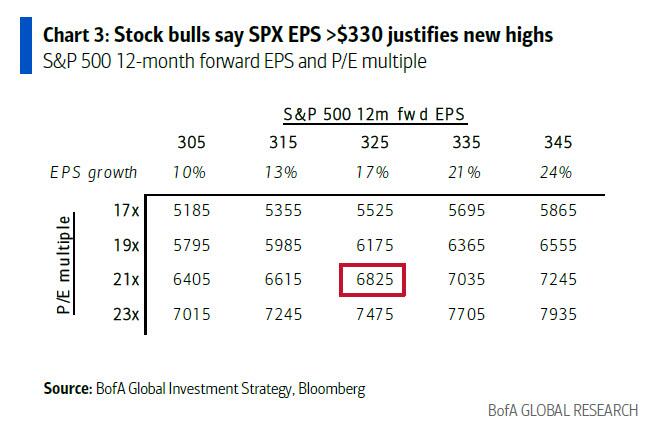
BofA Hartnett: The Current U.S. Stock Market Rally Is Turning Into a "Bull Trap"
华尔街见闻·2026/04/19 06:44

UMA (UMA) fluctuated 44.0% in 24 hours: Oval's new product excitement drives pump to $0.632 before retracement
Bitget Pulse·2026/04/19 06:35
MOVE (Movement) fluctuated 48.0% in 24 hours: trading volume surged by 318%, leading to high volatility performance
Bitget Pulse·2026/04/19 06:28
NOMERC 24-hour volatility at 40.1%: abnormal trading volume drives rebound in low-liquidity market
Bitget Pulse·2026/04/19 06:14
RIVER (RIVER) fluctuated 40.3% in 24 hours: Whale profit-taking and selling pressure led to sharp decline
Bitget Pulse·2026/04/19 05:52
BLUR (BLUR) 24-hour amplitude 41.0%: trading volume surges 34% driving price rebound from low point
Bitget Pulse·2026/04/19 05:40
LIGHT (Bitlight) fluctuates 102.4% in 24 hours: Trading volume surges and selling pressure liquidity swept
Bitget Pulse·2026/04/19 05:09
Flash
08:12
Monad co-founder: If rate limits were set on collateral supply, today’s rsETH incident could have prevented about 200 million dollars in lossesChainCatcher reports that Monad co-founder Keone Hon wrote: “I feel that funds pool lending protocols should set rate limits on the supply of assets deposited as collateral. For example, if the current supply is 100 million and the supply cap is 300 million, then in the next 10 minutes, the supply should only be allowed to increase to 110 million at most, rather than allowing a full 200 million to be deposited at once. In reality, no one needs to complete such a large-scale deposit in a single transaction. This is important because when certain exotic assets are attacked, the impact is determined by the size of the asset’s exit channels. Especially as many attacks involve infinite minting vulnerabilities, the scale that can be exited essentially sets the cap for losses in an attack. Lending protocols are often the largest exit channels. If an intelligent cap is introduced — an initial cap slightly above current supply and gradually adjusted to the true cap over several hours — this would have a huge effect. If this mechanism had existed, rsETH depositors could have avoided around $200 million in losses. This also suggests another viewpoint: asset issuers themselves should support this mechanism. If you're issuing voucher-type tokens with redemption delays, you may not worry about hackers directly redeeming from you, but you need to minimize the scale of external exit paths as much as possible without disrupting normal user operations. Therefore, a high supply cap should be viewed as a risk, not as a sign of strength. For example, the Hyperbridge DOT attack didn’t result in $100 million losses because there were few available exit channels; the Resolv attack losses were $24 million instead of $200 million because the scale of the exit channels limited the loss cap. This is an obvious principle, but there are practical steps that can be taken immediately: audit the supply caps of all assets, and reduce the caps where they are unnecessary.”
08:00
Monera Digital founder Gongye Feng: AI should serve as a "trust accelerator" for private banks, not a replacement for traders.According to ChainCatcher, at the "Crypto 2026: From Cryptocurrency to Intelligent Economy" forum held in Hong Kong, Monera Digital co-founder and CEO Gongye Feng delivered a keynote speech titled "AI-Enabled Private Banking for the Intelligent Economy." Feng pointed out that it was not the demand for digital assets that disappeared after 2022, but rather market confidence in the ways capital enters. Monera Digital positions itself as an AI private bank for the intelligent economy, with its core not being to use AI as a trader, but as an accelerator, shortening the cycle of research, testing, and iteration from months to just days. He emphasized that risk control must be institutionalized rather than personal. Monera has built four lines of defense: controlling exposure and collateral at the source, automated liquidation and margin management, full segregation of client assets, and eliminating maturity mismatch while maintaining a liquidity buffer. In addition, AI serves as a 24/7 digital CRO, enabling a leap from passive monitoring to proactive warning. In terms of service model, Monera does not operate as a purely technical platform but adheres to “anti-AI hallucination”, with AI focusing on optimization and efficiency, while trust, responsibility, and continuity of relationships remain the responsibility of humans. Feng believes that the true prerequisite for crypto assets to become configurable assets is translating complexity into clear, continuous, and trustworthy private banking services.
07:50
Aave sees $6.6 billion in withdrawals today, while USDT borrowing rate surges to 15%BlockBeats news, on April 19th, according to on-chain analyst Ashes' monitoring, today the amount of funds withdrawn from Aave has reached 6.6 billion USD, with half (3.3 billion USD) being stablecoins. After a large amount of capital was withdrawn, both deposit and borrowing rates soared, with USDT and USDC stablecoins' deposit rates hitting 13.4% and borrowing rates reaching 15%.
News